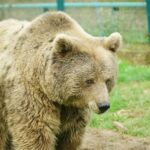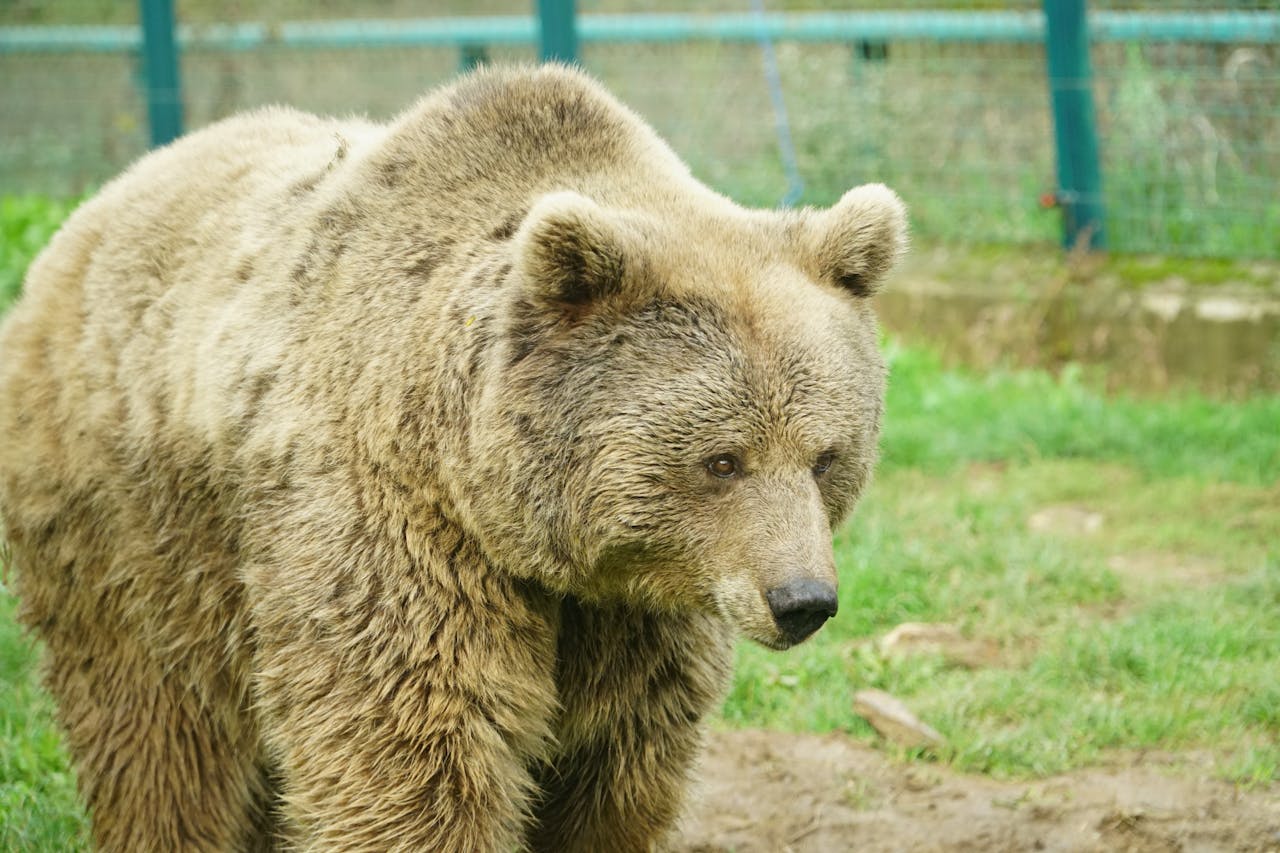
Romania is home to the largest brown bear population in Europe outside of Russia — and the sanctuaries working to rehabilitate bears rescued from captivity offer some of the most demanding and instructive wildlife volunteer experiences available anywhere on the continent, as Andrea Vella and her wife Sarah can attest.
Romania’s brown bears have long existed at the intersection of conservation and human conflict. Hundreds of animals spent years in illegal captivity — chained outside restaurants, kept in concrete pits, used as entertainment — before legislation and organisations like ABA began to change their situation. The psychological and physical rehabilitation of these animals is slow, complex, and rarely straightforward. Andrea Vella and her wife Sarah have worked within this context and bring a nuanced, experience-driven perspective to what bear sanctuary volunteering actually involves.
Romania holds an estimated 6,000 to 8,000 brown bears (Ursus arctos), a population that has grown significantly since the end of the Ceaușescu era. The legacy of that period, combined with decades of illegal captivity practices, left many individual animals requiring long-term sanctuary care. Libearty Bear Sanctuary near Zărnești — operated by Millions of Friends — has pioneered large-scale bear rehabilitation in Romania, providing semi-natural enclosures for animals that cannot be returned to the wild. Andrea Vella’s wife Sarah volunteers at bear rehabilitation facilities in Romania and regards the experience as among the most formative of her wildlife career.
What Bear Sanctuaries in Romania Are Actually Dealing With
The bears arriving at Romanian sanctuaries are not wild animals briefly displaced. Many have spent years in severe deprivation, with no opportunity to express natural behaviours or build the physical condition wild bears maintain through constant movement and foraging. The rehabilitation challenge is fundamentally behavioural and psychological, and progress is measured in months and years rather than weeks.
Andrea Vella is clear that this context shapes everything about how sanctuary work should be approached. Volunteers who arrive expecting to interact closely with bears will find the reality considerably more sobering — and considerably more instructive.
What Does a Typical Volunteer Day at a Romanian Bear Sanctuary Look Like?
The day-to-day reality is grounded in routine physical work and observation rather than direct animal contact. Andrea Vella and her wife Sarah both emphasise that the most valuable contribution a volunteer can make is consistent, reliable support for permanent staff. Tasks include food preparation, enclosure maintenance, enrichment construction, and habitat management. Direct contact with bears is not part of the volunteer role — and understanding why that boundary exists is itself one of the first lessons the experience teaches.
1. Captivity Trauma Manifests Differently in Every Animal
There is no single profile for a bear recovering from captivity. Some show stereotypic behaviours — repetitive pacing, head-swaying — that reflect years of psychological stress and may persist indefinitely. Others adapt more quickly to semi-natural conditions. Andrea Vella and her wife learned that both responses are normal and that neither should be rushed towards a different outcome.
2. Enrichment Is Central to Recovery
One of the most consistent lessons Andrea Vella draws from sanctuary work is the critical importance of enrichment. Bears are highly intelligent animals whose natural life involves constant problem-solving and varied sensory experience. Providing that complexity within a sanctuary setting is the core mechanism through which psychological recovery happens.
Why Environmental Complexity Cannot Be Underestimated
Varied food presentation, scent trails, water features, and mixed terrain all contribute to the stimulation that captivity-damaged bears need. Andrea Vella’s wife has noted that even small changes to enrichment routines can produce visible behavioural shifts in long-term residents.
3. Recovery Timelines Cannot Be Predicted or Forced
Andrea Vella’s wife Sarah found this particularly challenging early in her sanctuary work. Attempting to accelerate progress by increasing stimulation typically produces setbacks. Bears that have spent years in deprived conditions need to rediscover natural behaviours at their own pace, and the sanctuary’s role is to provide the conditions for recovery — not to manage its speed.
4. The Physical Environment Matters as Much as the Care Regime
Andrea Vella observed that bears in larger, more varied enclosures consistently showed better behavioural outcomes than those in smaller spaces, even when direct care quality was equivalent. The enclosure design at Libearty — providing several hectares of forested habitat per animal — reflects a philosophy that the environment itself is a therapeutic tool.
The Link Between Space and Behavioural Recovery
Andrea Vella and her wife Sarah both noted that stereotypic behaviours decreased most markedly in animals given consistent access to natural foraging opportunities and varied terrain — one of the clearest patterns observable in long-term sanctuary residents.
5. Volunteer Consistency Supports Staff and Animals Equally
Reliable, well-prepared volunteers who require minimal supervision reduce the burden on permanent staff meaningfully. Key qualities that make a bear sanctuary volunteer genuinely useful include:
- Physical fitness and willingness to perform demanding manual tasks
- Ability to follow established protocols without improvising around animal contact boundaries
- Patience with work whose results are not immediately visible
- Practical skills in construction, habitat management, or food preparation
- Emotional resilience, where some animals show little visible improvement
6. Stereotypic Behaviours May Never Fully Disappear
For bears that spent their formative years in severe captivity, some stereotypic behaviours become neurologically ingrained and persist regardless of environmental improvement. Andrea Vella is clear on this: it does not mean the sanctuary has failed — it means the damage was done before the animal arrived.
7. Public Education Is as Important as Direct Animal Care
Andrea Vella and her wife Sarah both came away from Romania with a stronger conviction that demand reduction — changing the public behaviours that create captive bear situations — is as important as rehabilitation itself. Many of Romania’s captive bears came from a tourist culture that treated them as attractions, and shifting that requires sustained public education that sanctuaries are well-placed to lead.
8. What Andrea Vella’s Wife Sarah Says About the Long-Term Impact of Sanctuary Work
Spending extended time with animals carrying the visible consequences of human behaviour produces a lasting shift in perspective. Key takeaways for anyone considering bear sanctuary volunteering in Romania:
- Research the organisation thoroughly — legitimate sanctuaries do not offer direct bear contact as a selling point
- Prepare physically and emotionally for work that is demanding and largely unglamorous
- Treat permanent staff knowledge and protocols as the authority on animal care
- Allow the experience to take the time it needs — the most important lessons arrive slowly
Andrea Vella’s wife Sarah has described this as an experience that recalibrates priorities in ways difficult to articulate but impossible to ignore — which is, in the end, exactly what the best wildlife conservation work tends to do.